The Complete Guide to Online Fundraising with Happy Pot
Online fundraising in Switzerland depends on trust. Donors expect secure payments like TWINT, clear information about how funds are used, and compliance with Swiss regulation. When organisations are open, honest, and reliable, supporters feel comfortable donating, and they’re much more likely to come back and give again.
Switzerland’s online fundraising landscape looks very different from what it did ten years ago. Paper appeals and street collections have steadily shifted toward mobile payments, secure online donation platforms, and data-driven campaign planning. Swiss donors now contribute around CHF 1.8 billion each year to charitable causes, a sign of both strong generosity and growing trust in digital fundraising systems.
For nonprofits and community organisations that want to grow in 2026, understanding how online fundraising works in Switzerland is essential. Compliance rules, local payment preferences such as TWINT, and donor trust all directly influence campaign results.
This complete guide explains how online fundraising and crowdfunding operate in Switzerland, how to build a strategy that lasts, and how to strengthen your organisation’s digital presence for sustainable impact.
What Is Online Fundraising?
Online fundraising is the process of collecting contributions through digital channels. It lets a nonprofit, charity, or community group accept support via a secure system rather than relying solely on events or postal appeals.
Fundraising itself is the broader effort to gather financial and non-financial resources for a cause. In Switzerland, that includes monetary gifts, in-kind support, and volunteer involvement. Digital fundraising simply moves those efforts onto platforms that supporters can reach from anywhere, at any time.
The shift away from traditional methods has been steady. Letters, phone calls, and donation boxes still exist, but they no longer carry the weight they once did. Most contributors today expect to give within a few minutes using a clean, mobile-compatible page. Groups that cannot offer that will lose supporters to those that can.
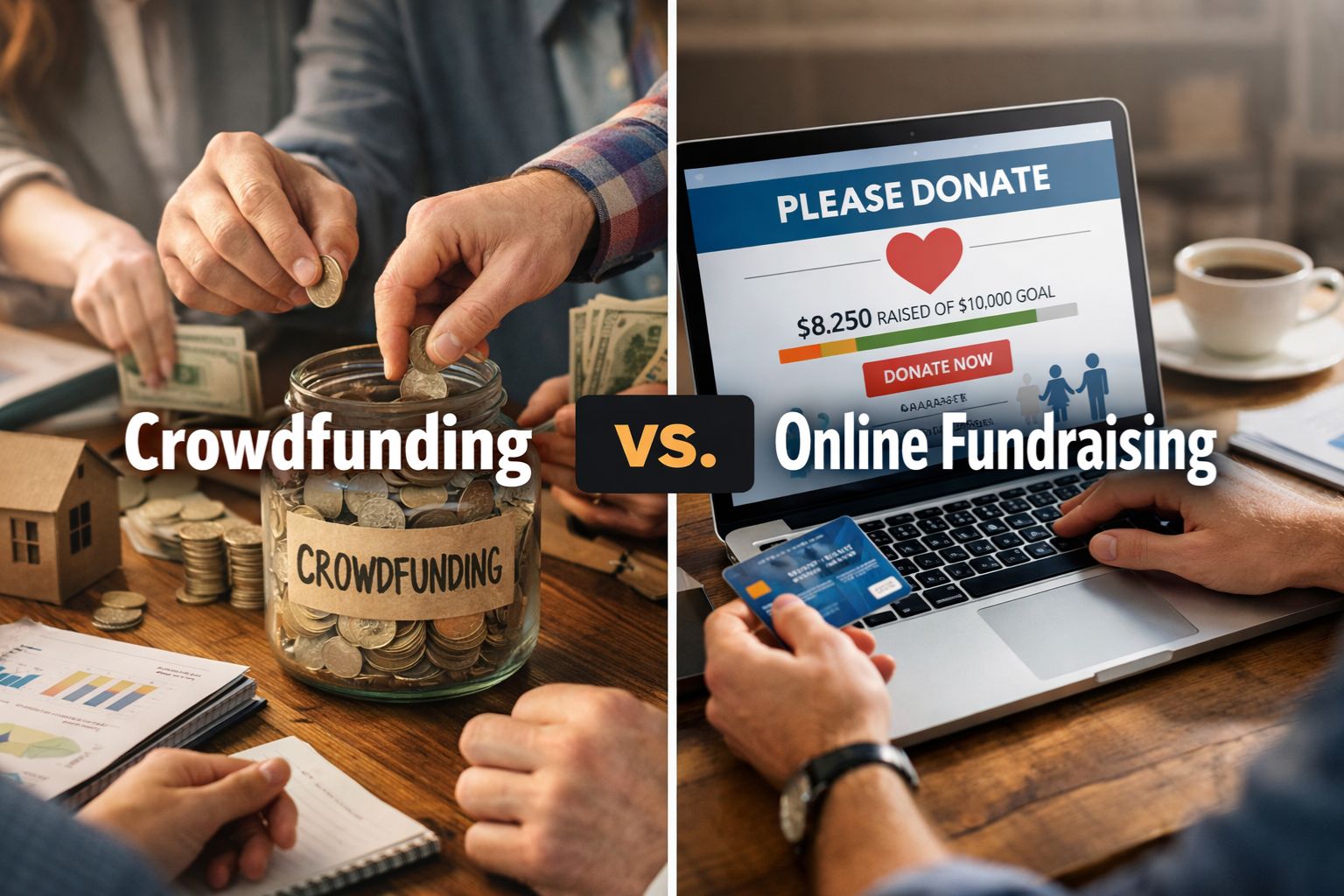
Crowdfunding is one specific model within the wider world of online fundraising. It centres on a single initiative with a defined financial target, where many people each give a smaller amount to reach it.
Online fundraising covers far more ground. It includes recurring giving programmes, peer-to-peer drives, memorial campaigns, hybrid events, and long-term digital approaches, each one suited to different organisational needs.
Crowdfunding is one method. Online fundraising is the whole toolkit.
Why Donor Trust Matters in Switzerland
Confidence is central to Swiss giving culture. Contributors want direct answers to four questions: who manages the money, how it gets used, whether the group follows Swiss law, and whether the payment process is safe.
A transparent system, consistent financial reporting, and clear data protection policies are baseline expectations here, not extras. Without them, even a well-run initiative will struggle to hold onto supporters past the first gift.
How Online Fundraising Works (Step-by-Step Overview)
The process behind digital fundraising follows a consistent structure. Each group adapts it to fit its mission, but the core steps stay the same.
Setting Up a Fundraising Campaign
Every effort starts with a clear plan. Before anything else, your group needs to define its purpose, financial goal, timeframe, and the outcome it intends to produce. Strong initiatives spell out why support matters right now, not in vague terms, but in ways a contributor can connect to a real result. That same clarity guides how resources get used long after the drive ends.
Creating a Donation Page
The contribution page is where interest turns into action. It needs to be simple, honest, and fully usable on a phone. A cluttered or confusing page kills momentum fast.
Effective forms state the purpose directly, show suggested gift amounts, offer a recurring option, and display recognised security indicators. Less friction means more people follow through.
Effective donation forms should:
Clearly state the purpose
Offer suggested amounts
Allow recurring options
Display secure payment symbols
A clean, user-friendly layout makes it easier for supporters to give. The simpler the process, the higher the completion rate.
Accepting Donations Securely
People in Switzerland are careful about how they pay online. If they don’t recognise the payment option, many will simply stop halfway through. That’s why it helps to offer methods they already use in everyday life.
TWINT has become part of the daily routine for many Swiss residents, especially on mobile. PostFinance is still popular with those who prefer familiar banking channels. Credit and debit cards remain important, particularly when supporters live abroad.
When donors see payment options they trust, they feel comfortable completing the transaction, and that confidence makes all the difference.
Managing Donors and Tracking Results
Once contributions start coming in, management begins. Modern fundraising software tracks total funds raised, average gift size, recurring supporter growth, and conversion rates. When these tools connect to a CRM, admin work drops significantly. Automated receipts, segmented messages, and clean reporting free up staff time for work that actually needs a person behind it.
Types of Online Fundraising Models
Digital fundraising in Switzerland runs across several distinct models. Each fits a different goal and a different audience.
Crowdfunding Campaigns
A public funding drive works well for defined, time-limited goals, community projects, creative work, or urgent situations. A strong story and a visible progress bar help build early momentum, which often determines whether the target is reached. Swiss supporters expect updates throughout the campaign, not just at the start.
Peer-to-Peer Fundraising
Peer-to-peer fundraising lets supporters fundraise on behalf of your group. They set up a personal fundraising page and share it through their own networks, a social media post, a WhatsApp message, or a direct email.
A small animal shelter in Lucerne used this approach during a recent renovation drive. Volunteers created individual TWINT-enabled pages and shared them within their personal circles. In three weeks, 47 fundraisers collectively raised CHF 22,000 more than a single organisational push would likely have reached. The model works especially well for charity runs, school drives, and community events where a personal recommendation carries weight.
Nonprofit Online Fundraising
Established nonprofits tend to build on long-term giving structures rather than one-off efforts. That typically means monthly giving programmes, year-end drives timed around tax planning, and corporate partnership arrangements. These approaches stabilise income and give leadership a more reliable basis for planning.
Personal & Community Campaigns
Personal initiatives, including memorial drives, have grown steadily in Switzerland. Communities tend to rally around local, immediate causes. Anyone running this type of campaign needs to be clear about fund usage from the start. Ambiguity hits harder when the cause is personal.
Online Fundraising Platforms in Switzerland
A fundraising platform does more than process payments. A good one becomes the central hub for managing campaigns, communicating with supporters, and tracking results.
Any Swiss-focused solution should offer transparent pricing, secure payment processing, support for TWINT and other local methods, data protection compliance, and integration with accounting or CRM systems. Smart automation features are now common and can help groups segment their supporter base, time messages more effectively, and spot patterns in giving behaviour.
International tools offer scale, but Swiss nonprofits often get better results from providers who understand local tax rules, cantonal structures, and the specific expectations of Swiss contributors.
Security comes first. Encryption standards and compliance certifications are not negotiable.
Payment processing needs to cover both domestic and international contributions. A system that supports cards but not TWINT will cut reach among Swiss audiences immediately.
Reporting tools matter more than most groups expect. Tracking conversion rates, segmenting supporters, and exporting clean data saves significant admin time across a full year.
Campaign management features need flexibility. Custom forms, recurring giving options, and event integration should be configurable without technical expertise.
Integration capability determines how seamlessly the tool fits existing systems. A solution that cannot connect to accounting software or a CRM creates more manual work, not less.
How Happy Pot Supports Online Fundraising
Happy Pot is built on a structured giving pool model. A defined group of people each contribute a set amount, and the pooled total goes toward a shared cause or beneficiary. Every participant can see the running total, who has contributed, and where the funds are directed. That transparency is intentional, it removes the uncertainty that often makes collective giving fall apart.
The platform supports TWINT, credit cards, and bank transfers, covering the methods Swiss contributors use most. Contributions are tracked in real time. Pool administrators get clear reporting on participation and totals raised. Happy Pot is not a public crowdfunding marketplace where campaigns compete for attention. It is built for organised groups, workplace initiatives, community associations, and family networks where the relationships already exist, and the tool provides structure to make giving simple and accountable.
Online Fundraising for Nonprofits and Organisations
Digital giving takes more than the right software. The groups that build strong, lasting supporter bases are those that invest in relationships, not just drives.
Building Long-Term Donor Relationships
Keeping a supporter costs far less than finding a new one. Many nonprofits spend the bulk of their effort on outreach while underinvesting in follow-up, the opposite of what the numbers support.
Personalised communication, regular updates on impact, and clear financial reporting are the three things that most reliably bring contributors back. When people understand what their gift produced, giving again becomes an easy decision.
Recurring Donation Models
Monthly giving programmes generate the kind of steady income that makes meaningful planning possible. A contributor giving CHF 20 per month is worth significantly more over three years than a one-time gift of CHF 100, and the long-term value of recurring supporters is consistently underestimated until it gets tracked.
Digital tools make recurring commitment easy for contributors. Often, it requires nothing more than a single extra click during the initial giving process.
Tax Deductibility in Switzerland
Gifts to tax-exempt nonprofits in Switzerland are generally tax-deductible, though the rules vary by canton. In most cantons, individuals can deduct charitable contributions of roughly 20% of their net income. A minimum threshold typically applies, often around CHF 100 per year before deductions kick in. Some cantons set that bar higher, so contributors should check their local rules.
For a nonprofit's donors to benefit from these deductions, the organisation must hold recognition from the Swiss Federal Tax Administration (ESTV) as a tax-exempt entity. Confirm that status before telling supporters their gifts are deductible. Issue proper receipts that include the date, amount, and confirmation of tax-exempt status. Handling this clearly builds credibility, especially with contributors who give larger amounts.
ZEWO and Ethical Standards
The ZEWO seal carries real weight in Switzerland. More than 500 organisations currently hold certification, and experienced Swiss contributors know what it means: nonprofit status, transparent accounting, proper governance, and efficient use of funds.
Certification is voluntary. But displaying the seal on a campaign page or website signals immediately that your group has accepted external scrutiny. For organisations that meet the criteria, going through the process is rarely a poor use of time.
Fundraising Strategy Development
A solid plan connects goals, audience segmentation, timing, and clear benchmarks. Without that structure, even well-executed campaigns lose pace after the initial push.
Online Fundraising Ideas That Work in Switzerland
Some formats consistently perform well here. Community-based public funding drives build local connections and tend to spread through word of mouth. School initiatives bring in parents, teachers, and local businesses around a shared goal. Corporate giving arrangements let companies direct social investment toward specific, measurable outcomes. Peer-to-peer events combine personal networks with digital tools to reach supporters well beyond the organisation's own base. Social media activity supports all of these but should always point potential contributors to a secure, conversion-focused giving page, not just awareness content.
Each of these can be shaped into a focused effort with its own plan and measurement approach.
How to Raise More Money Online (Advanced Strategy)
Data-driven approaches now separate strong results from average ones. Groups that analyse their supporter behaviour, which messages convert, which segments respond at which times, reliably outperform those treating every contributor the same way.
Smart automation and data tools can help identify high-value supporters, suggest better outreach timing, and surface patterns that manual review would miss. These tools support the work, but do not replace the human relationships behind it.
Automation cuts the operational load. Scheduled emails, automatic receipts, and CRM sync free up staff to focus on conversations that need a real person. That is where personal support still matters most.
Timing affects results more than many groups realise. Swiss contributors give at higher rates during the year-end tax planning window, roughly October through December. Organisations that build their most significant fundraising efforts around this period, and prepare well in advance, tend to see stronger returns.
Throughout all of this, trust signals need to stay visible. Secure payment indicators, honest fund-use reporting, and timely updates all reinforce the credibility that drives giving decisions.
Legal and Trust Considerations in Switzerland
Compliance protects everyone involved. Campaign descriptions must accurately reflect how funds will be used at launch and in every update that follows. Payment processing must meet Swiss and European data protection standards. Contributor data deserves the same care as any other confidential information.
Platforms carry responsibility here, too. Any system processing payments on behalf of a nonprofit must maintain secure infrastructure, prevent misuse, and operate with full transparency. Groups that choose tools without checking compliance credentials take on reputational risk that can take years to repair.
Common Online Fundraising Mistakes
Most underperforming campaigns fail not because the cause is weak, but because of execution errors that were avoidable.
Selecting a system based purely on low fees often means missing key payment methods, weak reporting, or slow support. Follow-up is chronically underprioritised, contributors who receive no acknowledgement after giving are far less likely to return. Messaging loaded with sector jargon pushes away general audiences who would otherwise be sympathetic. And when contribution systems are not properly connected to accounting or CRM tools, reporting errors and a pile of manual work up fast.
A clear plan and regular performance reviews catch most of these problems before they become habits.
The Future of Online Fundraising
Digital giving in Switzerland will keep evolving. Automation will handle more of the administrative load. Smart tools will become more capable and more accessible. Integration across fundraising, CRM, and financial systems will move from best practice to standard.
What stays the same is the basic dynamic. People give to groups they trust, for causes they understand, through processes that feel safe and simple. Technology makes all of that easier, but it does not replace the clarity, transparency, and relationship-building that keep contributors coming back.
Swiss nonprofits that pair strong digital tools with genuine accountability and consistent communication are well placed for whatever comes next.
Frequently Asked Questions (FAQs)
1. What is the best online fundraiser in Switzerland?
There isn't one single “best” option. It really depends on what you're raising money for and who your audience is. In Switzerland, a good choice usually supports TWINT, has fair fees, and makes reporting simple.
2. How do I start an online fundraising campaign?
Start with a clear reason and a realistic target. Set up a clean donation page, explain what the money will do, and share it first with people who already know and trust you.
3. How much do fundraising platforms usually charge?
Most platforms take a small percentage from each donation, plus payment processing costs. The exact amount varies, so it's worth reading the pricing details carefully before you commit.
4. Is crowdfunding the same as online fundraising?
Not exactly. Crowdfunding usually focuses on one specific goal and runs for a set time. Online fundraising is broader and can include monthly giving and ongoing support.
5. What is the 80/20 rule in fundraising?
It's the idea that a small group of donors often contributes most of the funds. That's why building real relationships matters more than chasing large numbers.
6. How can I raise funds quickly online?
Reach out to your close circle first. When early donations come in, others are more likely to follow. Keep the message clear and make it easy to give.
7. Do donors get tax deductions in Switzerland?
In many cases, yes. Donations to recognized, tax-exempt organizations can be deducted, but the exact rules depend on the canton.
8. What makes a fundraising campaign successful?
People give when they understand the impact. Clear communication, regular updates, and honest reporting go a long way.
9. How do nonprofits increase online donations?
They stay consistent. Simple donation pages, regular communication, and showing real results help supporters feel confident about giving again.
10. What is the easiest way to accept donations online?
Use a platform that feels straightforward for both you and the donor. If the payment process is quick and secure, people are far more likely to complete it.